
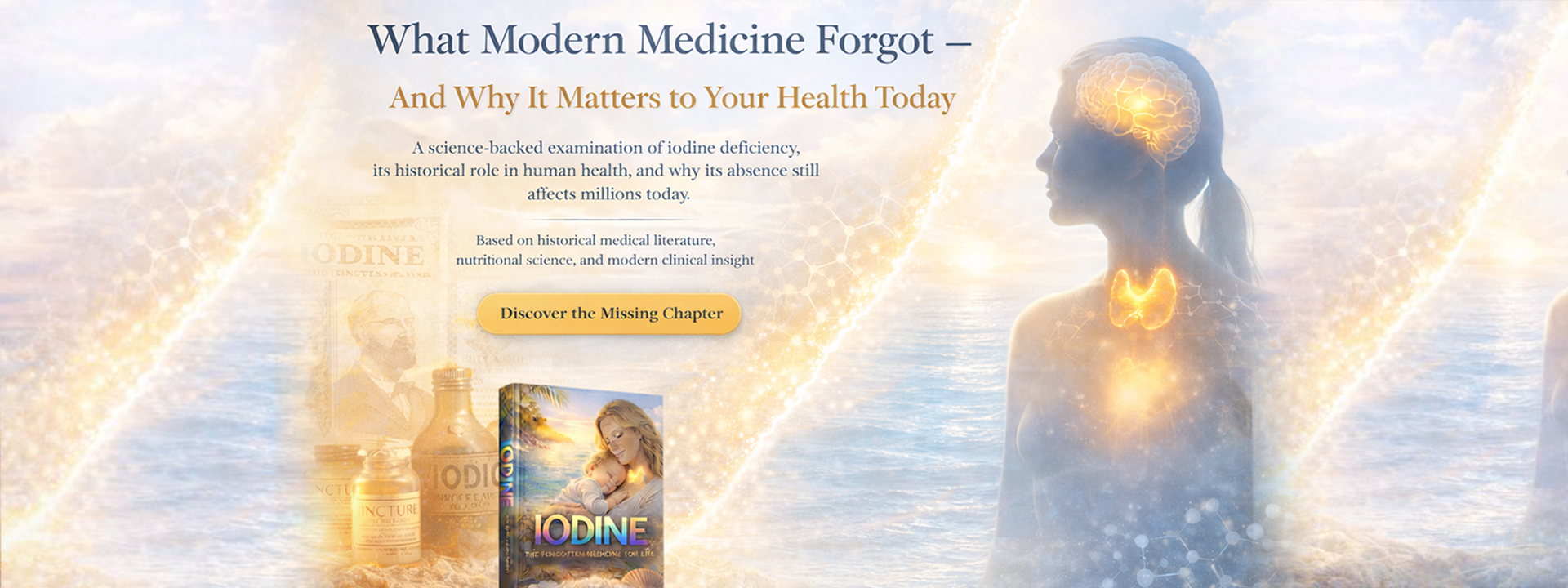
Is Your Body Getting Enough of This Essential Mineral?
The quiet element once central to human vitality, cognition, and resilience, and why its full story quietly disappeared from modern medicine.
There is a particular kind of tiredness that doesn’t come from effort or overwork. It comes from living for years with the sense that something isn’t quite right, even when nothing appears “wrong” on paper. You sleep, but don’t feel restored. You think, but not with the clarity you once had. Your body functions, but without the quiet vitality that makes life feel fluid and resilient.
Nothing feels urgent enough to alarm anyone else. Blood tests come back “normal.” No diagnosis is given. And so the deeper questions are never asked. This book exists for people living in that space — where life works, but does not fully thrive.
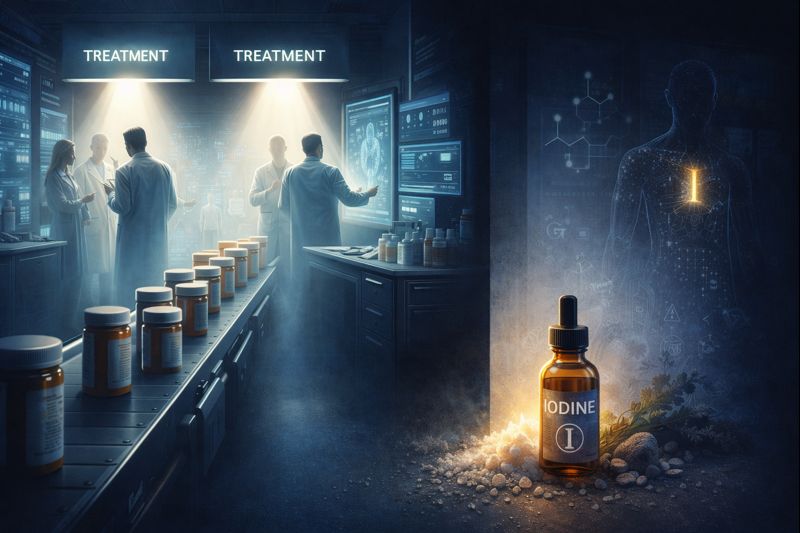
Modern medicine did not abandon iodine because it was ineffective, unsafe, or disproven. It abandoned it because iodine could not be patented, did not generate recurring revenue, and did not fit a healthcare system built around chronic management rather than foundational correction.
The healthcare system as we have it today unfortunately is not neutral ground. It is an ecosystem shaped by incentives, time constraints, institutional priorities, and commercial forces. Within that ecosystem, nutrition occupies a strangely marginal position. Doctors receive remarkably little formal training in nutritional biochemistry, micronutrient sufficiency, or long-term environmental influences on health. Modern medical education is designed to identify pathology, manage acute risk, and intervene decisively when disease is already established. It is not designed to explore slow, systemic imbalances that develop quietly over years. Iodine sits precisely in that blind spot.
Once salt iodisation reduced severe iodine deficiency at a population level, iodine was mentally reclassified as “handled.” From that point forward, it ceased to be a subject of curiosity, nuance, or continued investigation within mainstream clinical training. There was no urgency to revisit it. No crisis demanding attention. And crucially, no commercial incentive to keep it in the foreground.
Unlike pharmaceuticals, iodine is not proprietary. It cannot be patented. It does not generate recurring revenue. There is no sales force educating doctors about its broader biological roles, no sponsored conferences dedicated to its long-term relevance, no marketing campaigns reinforcing its importance. In a system where much continuing medical education is influenced, funded, or framed by pharmaceutical interests, what is not promoted gradually disappears from conversation. This does not require malice to occur. It happens by default.
Medical training has increasingly emphasized symptom management, diagnostics, and pharmaceutical intervention because those are the tools most readily available, measurable, and reimbursable. Nutrition, by contrast, is complex, individualized, slow to manifest, and difficult to standardize. It does not fit neatly into ten-minute consultations or algorithm-driven care models. As a result, it is often reduced to general advice or deferred entirely.
Iodine suffered from this shift more than most nutrients because it straddles two worlds. It is essential, yet subtle. Powerful, yet easy to oversimplify. Necessary for life, yet rarely dramatic enough to trigger alarm unless deficiency becomes severe. When medicine moved toward efficiency and specialization, iodine simply no longer had a clear home.
At the same time, pharmaceutical competition filled the vacuum. Conditions once explored through nutritional and environmental lenses became increasingly medicalized and managed through drugs that target downstream symptoms rather than upstream contributors. This approach is not inherently wrong. In many cases, it is life-saving. But it leaves little room for revisiting foundational questions about elemental sufficiency, especially when those elements do not align with commercial interests.
Over time, a quiet narrative took hold: iodine is only about the thyroid, iodine deficiency is rare, iodised salt solved the problem, and further discussion is unnecessary or even risky. That narrative was repeated often enough to feel settled, even though it rests on assumptions that deserve scrutiny in a world of changing diets, depleted soils, processed food systems, environmental halogens, and reduced salt consumption.
Doctors, operating within this system, understandably follow what they were taught. They trust guidelines. They rely on consensus. And because iodine is no longer emphasized in training, it is rarely explored beyond basic reference ranges. Not because it lacks importance, but because it no longer fits the dominant model of care.
This is how iodine drifted to the fringe of modern medicine. Not through ignorance, but through omission. Not through failure, but through structural design.
This book exists to address that omission.
This book is not written from hostility toward modern medicine. It recognises its strengths, its life-saving interventions, and the genuine dedication of many clinicians working within it. But it also does not grant the modern medical system automatic authority over every question of health.
What happens when essential knowledge falls outside the incentive structures that shape modern healthcare? Iodine’s story was not disproven. It was abbreviated. And when a story is shortened long enough, people stop noticing what is missing. This is where blind spots are created.

For thousands of years, iodine would not have been overlooked so easily. Ancient societies noticed something modern systems forgot how to observe. Communities near the sea consistently appeared healthier, more robust, and more resilient than those living inland. Growth patterns differed. Cognitive development differed. Certain visible conditions appeared frequently in some regions and rarely in others.
In ancient China, healers burned seaweed into ash to treat swollen neck conditions. In ancient Greece, Hippocrates documented marine substances in medical use. Indigenous cultures across continents preserved oral traditions linking sea-derived materials with balance and vitality.
These were not rituals. They were responses to observable outcomes. Science eventually caught up in 1811, when iodine was isolated from seaweed ash. Within decades, iodine became foundational to medicine. Surgeons used it as an antiseptic. Physicians debated its therapeutic roles. Lugol’s solution entered mainstream practice. Iodine was not fringe. It was central.
A Story Older Than Modern Medicine


The Public-Health Triumph — And Its Unintended Consequence
By the early twentieth century, iodine deficiency was recognised as one of the most significant public-health challenges in the world. Salt iodisation worked brilliantly. Goitre rates fell. Developmental outcomes improved. From a population perspective, it was one of the most elegant interventions ever implemented.
But success came with an unintended consequence. Once iodine deficiency appeared solved, iodine itself quietly left the spotlight. Medical education narrowed its scope. Research conversations compressed. And an element once discussed in depth became something most people were told not to think about at all.
What the Evidence Still Shows
This book examines published evidence from global health organisations, epidemiological studies, and historical data showing what can occur when iodine intake is too low in certain populations, and what changes when intake is adequate.
Research cited includes findings from WHO, NHANES, and international meta-analyses indicating that inadequate iodine intake has been associated with impaired thyroid function, developmental delays, reduced cognitive performance in children, and goitre in affected regions.
Severe deficiency during pregnancy has been linked in the literature to miscarriage, stillbirth, congenital abnormalities, and intellectual impairment. In adults, low iodine status has been associated in studies with symptoms such as fatigue, cold sensitivity, and metabolic disruption.
The book presents this information responsibly, emphasizing variation between individuals and the importance of professional guidance while restoring context that is rarely discussed in full.
What the Evidence Still Shows
This book examines published evidence from global health organisations, epidemiological studies, and historical data showing what can occur when iodine intake is too low in certain populations, and what changes when intake is adequate.
Research cited includes findings from WHO, NHANES, and international meta-analyses indicating that inadequate iodine intake has been associated with impaired thyroid function, developmental delays, reduced cognitive performance in children, and goitre in affected regions.
Severe deficiency during pregnancy has been linked in the literature to miscarriage, stillbirth, congenital abnormalities, and intellectual impairment. In adults, low iodine status has been associated in studies with symptoms such as fatigue, cold sensitivity, and metabolic disruption.
The book presents this information responsibly, emphasizing variation between individuals and the importance of professional guidance while restoring context that is rarely discussed in full.
This is not a supplement pitch. It is not a shortcut. “Iodine: The Forgotten Medicine For Life” is written for readers who are no longer satisfied with surface explanations or recycled garbage. It is for those who recognise that foundational health knowledge was not disproven or replaced, but steadily narrowed as medicine reorganised itself around drugs, protocols, and scalable interventions. What was once common clinical understanding became inconvenient to teach, difficult to monetise, and easy to dismiss
It explores history, biochemistry, public health, environmental changes, competing halogens, and the difference between preventing deficiency and understanding sufficiency. The greatest gap in modern health is not a missing product. It is missing context.
My name is Grace Okoneski. I am an independent health researcher based in Melbourne, Australia. Like many people, I spent years feeling consistently below my best without any clear explanation. Routine tests were normal. Advice was generic. Nothing appeared wrong on paper yet something felt missing.
That question led me into a multi-year exploration of iodine’s history, science, and global use. I studied ancient medical texts, modern public-health data, Japanese dietary patterns, and researchers who continued asking questions long after iodine left mainstream discussion. What I discovered was not a secret. It was a missing chapter. This book exists to restore it.
Who This Book Is For
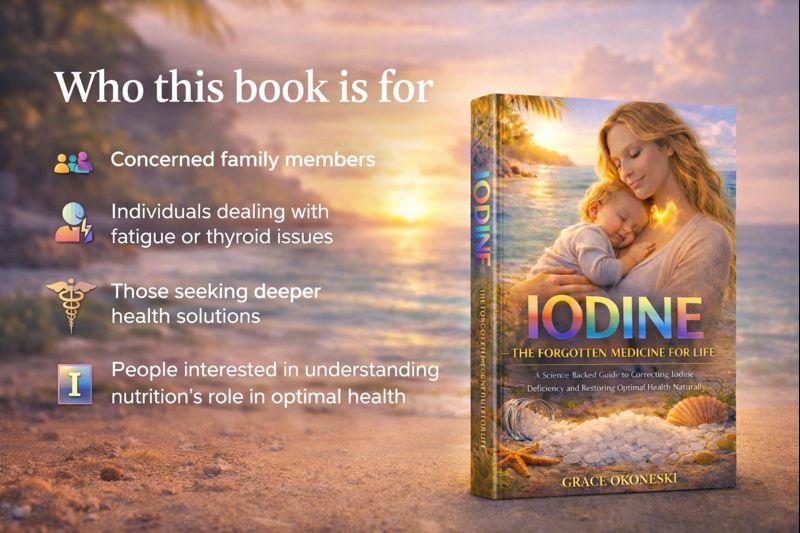
Obtain a copy of the book for yourself and your family and get access to this transformational information presented clearly, responsibly, and grounded in history and science so you can make informed decisions about your health and nutrition with confidence. This is especially helpful in today's world.
Your Order Is Protected From the Moment You Say Yes At this point, it’s natural to pause and ask yourself a simple question. “What happens if I decide this isn’t for me?” That’s a fair question and it deserves a clear answer.
Here’s How It Works
Once you place your order, you’ll receive immediate access to the book. From there, you can take your time. Read through the material carefully. Review the historical sources. Consider the scientific context presented.
If, at any point within 60 days, you feel the book did not meet your expectations or simply wasn’t right for you, you simply contact me directly, and I’ll personally make sure your refund is handled promptly.
No pressure. No awkward conversations. No questions asked. Why This Guarantee Exists Because this book is not about making promises. It is about offering perspective. You are not being asked to believe anything blindly. You are being invited to read, reflect, and decide for yourself. That’s why the risk stays with me — not with you.
Take the Time You Need You have a full 60 days to evaluate the book in your own space, on your own terms. If it adds value to your understanding, keep it. If it doesn’t, simply request your refund and move on with clarity and peace of mind. Either way, you are protected. I believe informed people make the best decisions. This guarantee exists so you can evaluate the material with clarity and confidence, knowing the risk stays with me


Important Disclaimer
The information presented on this website and in Iodine: The Forgotten Medicine For Life is provided for educational and informational purposes only. It is not intended to diagnose, treat, cure, or prevent any disease, nor is it a substitute for professional medical advice, diagnosis, or treatment.
This book explores historical, scientific, and nutritional perspectives on iodine that are not routinely covered in modern medical education. It reflects a synthesis of published research, historical medical literature, and clinical observations that encourage readers to think critically and independently about health foundations.
Medical science is not static, and no single book can account for individual circumstances, medical histories, or current treatments. Readers are encouraged to use the information presented as a basis for informed discussion, further research, and personal consideration, particularly if they have existing medical conditions, are pregnant, breastfeeding, or are under medical supervision.
Nothing on this website should be interpreted as a recommendation to stop, alter, or replace prescribed medications or medical care without consultation with a qualified healthcare professional.
By using this website or purchasing this book, you acknowledge that responsibility for health-related decisions ultimately rests with you, and that the author and publisher are not liable for how the information is applied.